

STEP 1
Ultimate Purity
Vacuum degassing + non-contact heating, the content of oxygen, hydrogen and nitrogen can be reduced to ppm level, with very few oxidative inclusions.

Add a short product description that highlights the key features, main benefits, and unique selling points of this product, helping customers quickly understand what it offers and why it stands out.
Vacuum Induction Melting (VIM) is a high-end metallurgical technology for manufacturing high-purity, high-performance master alloys and precision metals. It realizes metal melting, temperature control and refining in a high-vacuum sealed chamber by medium-frequency induction heating, ensuring ultra-clean and composition-accurate products.
Our VIM equipment features a fully automated control system, multi-stage vacuum pump units, and high-temperature resistant crucibles, which can effectively remove harmful gases (H, O, N) to ppm level, inhibit the burning loss of volatile elements, and avoid secondary pollution. The whole process is automated with precise temperature control (±5℃) and stable process parameters.
Widely applied in aerospace (single-crystal/directional solidification superalloy master alloys), energy, military industry and high-precision manufacturing fields, our VIM process provides high-quality raw materials for subsequent VAR, ESR, directional solidification and single-crystal casting processes, supporting the production of high-temperature, high-precision and high-purity products.
Induction Heating: A medium-frequency induction coil is built into the furnace. When an alternating current is passed through it, an alternating magnetic field is generated, which induces eddy currents inside the metal materials (electrodes/master alloy ingots) in the furnace. Electrical energy is directly converted into internal thermal energy of the metal, achieving rapid melting (no electrode contact, no external pollution).
By controlling raw materials, auxiliary materials, smelting processes, and other aspects, the product can achieve:
O+N+S≤10ppm
Harmful impurity elements Pb+Sn+Sb+Bi+As+Se ≤ 5ppm
The total amount of over 40 trace elements, including Pb, Sn, Ag, Bi, As, Se, Tl, etc., is less than 50ppm
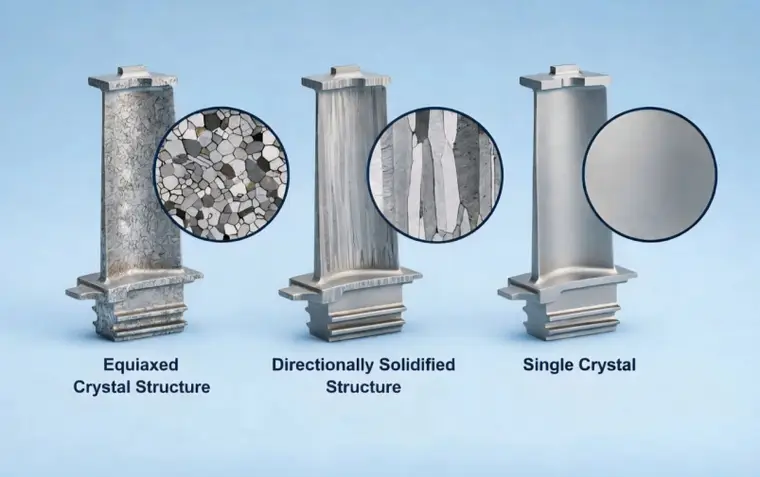
Ensure that the alloy composition of each furnace is qualified through In-furnace analysis and Post-furnace analysis.
The furnace fluctuation of main elements such as Cr, Mo, W, Ta, etc. is controlled within ± 0.05%, and the furnace fluctuation of Al and Ti is controlled within ± 0.03%
The furnace fluctuation of trace elements such as C, B, Zr, etc. is controlled within ± 0.005%
By innovating slag blocking and filtering technologies, the impurity content in the molten steel is controlled at the lowest level, and the remelted slag can reach zero level.
By optimizing the grain size, carbon content, carbide morphology, heat treatment, etc. of the alloy, the durability is improved by more than 60%, and the elongation is increased by 82%