Single Crystal Casting

Hastelloy B Alloy

Hastelloy B Alloy

Hastelloy B (UNS N10001, W.Nr. 2.4800) is a classic nickel-molybdenum (Ni-Mo) solid solution strengthened corrosion-resistant superalloy, developed by the Hastelloy International Company. This alloy is characterized by its high molybdenum content and extremely low chromium content, and is specifically designed for strongly reducing environments. It exhibits excellent tolerance in hydrochloric acid, hydrogen chloride gas, sulfuric acid, phosphoric acid, and various non-oxidizing chemical media. Since its development, it has been widely used in the chemical processing industry, petrochemicals, pharmaceuticals, environmental engineering, and energy sectors.

Hastelloy B Basic Introduction

Hastelloy B (UNS N10001, W.Nr. 2.4800) is a classic nickel-molybdenum (Ni-Mo) solid solution strengthened corrosion-resistant superalloy, developed by the Hayess International Company. As the base grade of the Hayess B alloy family, it is characterized by a high molybdenum content and an extremely low chromium content. This alloy is specifically designed for use in strongly reducing environments and has excellent tolerance to hydrochloric acid, hydrogen chloride gas, sulfuric acid, phosphoric acid, and various non-oxidizing chemical media. Since its development, it has been widely used in the chemical processing industry, petrochemicals, pharmaceuticals, environmental engineering, and energy sectors.

One of the main advantages of Hastelloy B is that it can maintain stable corrosion resistance and mechanical properties over a wide range of corrosive media and temperatures. Its high molybdenum content provides special tolerance to reducing acids (especially hydrochloric acid), while the extremely low chromium content design enhances its performance in non-oxidizing media. By carefully controlling the content of chromium and iron, the formation of harmful intermetallic phases is minimized, enabling the alloy to have excellent stability and corrosion resistance under harsh chemical processing conditions.

This alloy possesses a stable face-centered cubic (FCC) austenite matrix structure. As a solution strengthened alloy, Hastelloy B does not rely on the γ′ precipitation strengthening phase. Its strength mainly stems from the solid solution strengthening effect provided by the molybdenum atoms dissolved in the nickel-based austenite matrix, thereby endowing the alloy with excellent microstructure stability and minimizing performance degradation during long-term service.

Hastelloy B exhibits outstanding corrosion resistance in reducing environments, with excellent tolerance to hydrochloric acid, hydrobromic acid, phosphoric acid, and various organic acids. This alloy also demonstrates excellent resistance to chloride stress corrosion cracking and maintains good corrosion resistance in high-purity chemical media and harsh acidic environments, making it particularly suitable for applications in the chemical processing and petrochemical fields.

This alloy also possesses excellent manufacturing and processing characteristics, including good weldability, formability and machinability. It can be easily processed through operations such as forging, rolling, welding and machining. Therefore, Hastelloy B is widely used in salt acid production equipment, acid washing systems, reactors, heat exchangers, pumps, valves and various corrosion-resistant engineering equipment.

Hastelloy B Chemical Composition

Hastelloy B adopts the traditional Ni-Mo solid solution strengthening alloy system. Its mechanical properties are mainly achieved through solid solution strengthening rather than precipitation hardening.

Nickel (Ni): Balance

Molybdenum (Mo): 26.0–30.0

Iron (Fe): 4.0–6.0

Chromium (Cr): ≤1.0

Cobalt (Co): ≤2.5

Vanadium (V): 0.2–0.4

Manganese (Mn): ≤1.0

Silicon (Si): ≤1.0

Carbon (C): ≤0.05

Phosphorus (P): ≤0.04

Sulfur (S): ≤0.03

These alloying elements jointly form a stable face-centered cubic (FCC) austenite matrix structure. The high molybdenum content provides excellent tolerance to reducing environments (especially hydrochloric acid), while the extremely low chromium content design enhances performance in non-oxidizing corrosive media. By carefully controlling the chromium and iron contents, the formation of harmful intermetallic phases is minimized, thereby improving the stability and corrosion resistance of the alloy under harsh chemical processing conditions.

Hastelloy B Physical Properties

Hastelloy B can maintain excellent mechanical properties and structural stability under high-temperature and highly corrosive operating conditions. The density of this alloy is approximately 9.22–9.24 g/cm³, and its melting range is approximately 1330–1418°C.

Its microstructure is mainly composed of a stable face-centered cubic (FCC) nickel-based solid solution matrix, which exhibits excellent metallurgical stability. This alloy can still maintain good ductility, toughness and strength even after being exposed to high-temperature environments for a long time.

The solid solution strengthening mechanism provides excellent high-temperature strength, structural stability and heat fatigue resistance. Therefore, this alloy can withstand harsh thermal cycling conditions while maintaining structural integrity and mechanical reliability.

Furthermore, Hastelloy B exhibits excellent tolerance to hydrochloric acid, hydrobromic acid, phosphoric acid, and various organic acids, and demonstrates outstanding resistance to chloride stress corrosion cracking. Its high molybdenum content endows it with outstanding corrosion resistance in reducing environments, while the stable nickel-based structure ensures reliable performance during long-term service, making it the preferred material for demanding applications such as chemical processing, petrochemicals, and pharmaceuticals.

Hastelloy B Alloy Features

STEP 1

Excellent resistance to hydrochloric acid

This alloy has been specially developed for use in hydrochloric acid conditions. It exhibits outstanding corrosion resistance across a wide range of acid concentrations and working temperatures, and is one of the preferred materials for handling hydrochloric acid.

STEP 2

Outstanding ability to resist reductive environments

The high molybdenum content (26.0 - 30.0%) endows it with excellent tolerance to sulfuric acid, phosphoric acid, hydrogen chloride gas, and other non-oxidizing chemical media, while also demonstrating stability in reducing environments.

STEP 3

Excellent resistance to chloride-induced stress corrosion cracking

The nickel-rich matrix is insensitive to stress corrosion cracking and exhibits excellent reliability in a process environment containing chlorides, thereby avoiding the common chloride stress corrosion cracking problem of austenitic stainless steel.

STEP 4

Excellent processing and manufacturing characteristics

可通过锻造、轧制、冷成形、机加工和焊接等工艺进行加工,可制成板材、片材、棒材、管材、锻件及焊接结构等多种产品形式。

STEP 5

Processing and Heat Treatment Precautions

Due to its high molybdenum content and obvious work hardening tendency, machining usually requires a lower cutting speed, a well-structured machine setup with good rigidity, and high-performance carbide cutting tools. Special attention should be paid during welding, as in unfavorable thermal conditions, secondary phases may precipitate in the heat-affected zone. It is generally recommended to perform an appropriate solution annealing treatment after welding to restore the best corrosion resistance performance.

STEP 6

Outstanding microstructure stability

The stable face-centered cubic (FCC) nickel-based structure does not rely on the γ′ precipitation strengthening phase and maintains excellent toughness, corrosion resistance and structural reliability during long-term service.

The alloy processing properties of Hastelloy B

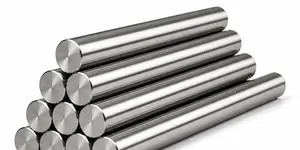
Hastelloy B can be produced through hot rolling, cold rolling, forging, drawing and manufacturing processes. This alloy offers a variety of product forms for selection, including sheets, strips, bars, tubes, pipe fittings, forgings and welded components, and it has excellent thermal and cold working properties.

Heat processing performance

This alloy exhibits excellent heat processing properties and can be formed through processes such as forging and hot rolling. During heat processing, it is recommended to uniformly heat the material to an appropriate temperature range and control the amount of deformation to avoid internal cracks or poor microstructure.

Cold working performance

Hastelloy B exhibits excellent cold working properties and can be processed through cold rolling, cold drawing, and cold forming techniques. However, due to its high molybdenum content, this alloy has a significant tendency towards work hardening. During the cold working process, the material rapidly hardens, so intermediate annealing treatment may be required to restore plasticity and facilitate subsequent processing.

Applications of Hastelloy B Alloy

Part Two: Hastelloy B

  • Chemical processing industry

Used in hydrochloric acid production equipment, acid washing systems, reactors, evaporators, and systems for handling corrosive chemicals.

  • The petrochemical industry

It is applied to acid treatment equipment, chemical reaction systems, and corrosion-resistant pipeline networks.

  • Pharmaceutical industry

Equipment and processing systems used for handling highly pure corrosive media.

  • Environmental Engineering

Suitable for smoke gas treatment systems, waste acid recovery devices, and corrosive wastewater treatment facilities.

  • Energy industry

Applied to high-temperature heat exchange equipment and corrosion-resistant structural components operating in harsh high-temperature environments.

  • Industrial equipment manufacturing

It is widely used in pumps, valves, piping systems, pressure vessels, and various corrosion-resistant engineering equipment.
Similar Models

Insights & Guides

网络已连接