

STEP 1
Outstanding Elevated-Temperature Strength
In738LC maintains excellent tensile and yield strength at elevated temperatures, making it highly suitable for critical gas turbine hot-section structural components.

In738LC (Inconel 738LC, Low Carbon) is a low-carbon precipitation-strengthened nickel-based cast superalloy specifically developed for high-temperature, high-stress and long-term hot-corrosion environments. Compared with conventional In738 alloy, In738LC features reduced carbon content and optimized minor alloying additions, significantly improving castability, weldability and resistance to hot cracking while still maintaining excellent elevated-temperature strength, creep resistance and oxidation resistance.
In738LC (Inconel 738LC, Low Carbon) is a low-carbon precipitation-strengthened nickel-based cast superalloy specifically developed for high-temperature, high-stress and long-term hot-corrosion environments. Compared with conventional In738 alloy, In738LC features reduced carbon content and optimized minor alloying additions, significantly improving castability, weldability and resistance to hot cracking while still maintaining excellent elevated-temperature strength, creep resistance and oxidation resistance.
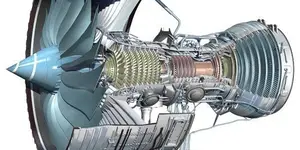
The alloy is extensively utilized in aero-engines, industrial gas turbines and advanced power generation systems for critical hot-section components, particularly for large and complex castings operating under prolonged elevated-temperature service conditions. Owing to its balanced combination of high-temperature mechanical performance and manufacturing reliability, In738LC has become one of the most widely used nickel-based cast superalloys for industrial gas turbine blades and guide vanes.
In738LC employs a typical gamma-prime (γ′) precipitation-strengthening mechanism in which aluminium, titanium and tantalum form a large volume fraction of Ni3(Al,Ti,Ta) strengthening precipitates. This strengthening system enables the alloy to maintain excellent mechanical properties and long-term microstructural stability at temperatures approaching 980°C to 1050°C. Meanwhile, cobalt, tungsten and molybdenum further improve elevated-temperature strength and creep resistance through solid-solution strengthening mechanisms.
Compared with standard In738 alloy, the low-carbon design of In738LC effectively reduces the tendency for continuous grain-boundary carbide precipitation, thereby improving casting crack resistance, weldability and manufacturing reliability for complex structural components. Consequently, the alloy is particularly suitable for large industrial gas turbine blades and high-temperature cast structural parts.
In addition, chromium provides excellent oxidation resistance and hot-corrosion resistance, while grain-boundary strengthening elements such as boron and zirconium further enhance stress rupture life and thermal fatigue resistance. These characteristics allow In738LC to maintain stable and reliable performance during prolonged exposure to severe thermal cycling environments.
| Elements | Range (%) |
|---|---|
| Chromium (Cr) | 15.5-16.5 |
| Cobalt (Co) | 8.0-9.0 |
| Molybdenum (Mo) | 1.5-2.0 |
| Tungsten (W) | 2.3-2.9 |
| Aluminium (Al) | 3.2-3.7 |
| Titanium (Ti) | 3.2-3.7 |
| Tantalum (Ta) | 1.5-2.0 |
| Niobium (Nb) | 0.4-1.1 |
| Carbon (C) | 0.08-0.13 |
| Boron (B) | 0.005-0.015 |
| Zirconium (Zr) | 0.03-0.10 |
| Nickel (Ni) | Balance |
In738LC exhibits excellent elevated-temperature mechanical properties and long-term microstructural stability. Its high melting range and favorable elastic modulus allow the alloy to maintain reliable structural integrity under severe thermal and mechanical loading conditions. In addition, its good thermal conductivity assists efficient heat transfer and dissipation within hot-section components.
The alloy microstructure contains a high volume fraction of uniformly distributed gamma-prime (γ′) strengthening precipitates. These precipitates effectively hinder dislocation motion, thereby significantly improving elevated-temperature strength, creep resistance and stress rupture life.
Due to its low-carbon design, the tendency for continuous grain-boundary carbide precipitation is effectively controlled. Consequently, compared with standard In738 alloy, In738LC demonstrates improved microstructural stability, better resistance to hot cracking and enhanced process reliability.
Furthermore, grain-boundary strengthening elements such as boron and zirconium improve crack propagation resistance and thermal fatigue resistance, making In738LC particularly suitable for cast hot-section components subjected to sustained thermal cycling and elevated-temperature mechanical loading.
In738LC is primarily manufactured through vacuum investment casting processes, enabling the production of large and complex hot-section components with excellent metallurgical quality and dimensional precision.
Depending on application requirements, the alloy may be produced through equiaxed casting or directional solidification processes. Directionally solidified In738LC provides further improvements in elevated-temperature creep resistance and thermal fatigue life.
Compared with conventional In738 alloy, In738LC exhibits significantly lower cracking sensitivity during casting processes, making it more suitable for manufacturing large and complex structural castings.
Due to its high gamma-prime (γ′) content and pronounced work-hardening tendency, machining operations generally require rigid equipment, optimized cutting parameters and high-performance carbide or ceramic cutting tools to improve machining efficiency and surface finish quality.
Appropriate heat treatment processes are critical for optimizing gamma-prime (γ′) precipitation and maximizing overall mechanical performance. Proper solution treatment and aging treatments significantly enhance elevated-temperature strength, creep resistance and stress rupture life.
Aerospace & Aviation
Power Generation
Oil & Gas
Energy Industry
Marine Industry
Automotive Industry
Chemical Processing
Military & Defense
Nuclear Industry
