

STEP 1
Superior high-temperature resistance
It can operate long-term at 850°C and above, featuring outstanding tensile strength, fatigue strength and creep resistance, with low risk of deformation or fracture.

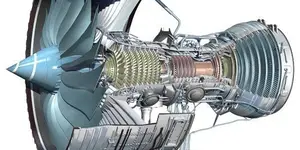
IN939 is a high-performance nickel-based superalloy. It retains high strength at temperatures above 850°C, paired with excellent corrosion and oxidation resistance. It is widely used for core components of aero-engines and gas turbines.
IN939 is a high-performance nickel-based superalloy. It retains high strength at temperatures above 850°C, paired with excellent corrosion and oxidation resistance. It is widely used for core components of aero-engines and gas turbines.
IN-939 is a corrosion-resistant nickel-based superalloy. Components made from this material are conventionally produced via precision casting and primarily deployed for blades and vanes in industrial gas turbines. As significant segregation occurs post-casting, the alloy cannot be used in its as-cast state under standard production processes. Accordingly, it must undergo solution heat treatment, followed by aging treatment, to attain optimal strength and ductility.
| C | Cr | Co | Mo | W | Ta | Nb | Al | Ti | Zr | B | N | O | P | S | Ni |
|---|---|---|---|---|---|---|---|---|---|---|---|---|---|---|---|
| 0.15 | 22.4 | 19.0 | <0.01 | 2.0 | 1.45 | 1.0 | 2.0 | 3.7 | <0.003 | 0.004 | <0.005 | <0.002 | <0.005 | <0.001 | Bal. |
3D Printing:
Heat Treatment
Critical Chemical Composition

