
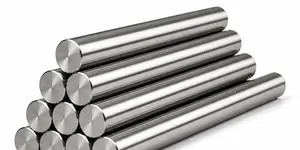
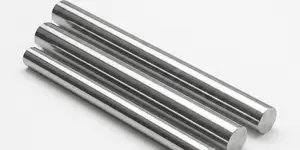


Inconel 718 Alloy
Inconel 718, also designated as Alloy 718, complies with UNS N07718 and conforms to ASTM B637, B670, as well as DIN/EN 2.4668 industrial standards. Additionally, it is marketed under alternative trade names including Nicrofer 5219, Altemp 718 and Chronin 718. Its domestic Chinese equivalent grade is GH4169, standardized under GB/T 15059.
Inconel 718 Introduction
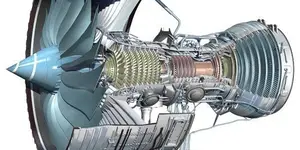
Inconel 718 is a precipitation-hardened nickel-chromium superalloy recognized for its outstanding tensile strength, superior corrosion resistance and excellent high-temperature structural stability. It delivers consistent and dependable performance under severe mechanical stress and repetitive thermal cycling, rendering it highly applicable for aero engines, gas turbines, and nuclear energy facilities.
Engineered for continuous service at temperatures up to 650°C, the alloy retains stable mechanical properties throughout prolonged operational lifespans. Featuring excellent fatigue resistance, superior creep rupture strength and remarkable oxidation resistance, Inconel 718 serves as a versatile engineering solution across aerospace, power energy, and oil & gas sectors.
Inconel 718 Chemical Composition
| Elements | Range (%) |
|---|---|
| Nickel (plus Cobalt) | 50.00-55.00 |
| Chromium | 17.00-21.00 |
| Iron | Balance* |
| Niobium (plus Tantalum) | 4.75-5.50 |
| Molybdenum | 2.80-3.30 |
| Titanium | 0.65-1.15 |
| Aluminum | 0.20-0.80 |
| Cobalt | 1.00 max. |
| Carbon | 0.08 max. |
| Manganese | 0.35 max. |
| Silicon | 0.35 max. |
| Phosphorus | 0.015 max. |
| Sulfur | 0.015 max. |
| Boron | 0.006 max. |
| Copper | 0.30 max. |
Inconel 718 Physical Properties
| Performance | Values |
|---|---|
| Density (g/cm³) | 8.19 |
| Melting Point (°C) | 1260 |
| Thermal Conductivity (W/(m·K)) | 11.4 |
| Elastic Modulus (GPa) | 205 |
Metallographic Structure of Inconel 718 Superalloy
Inconel 718 exhibits a face-centered cubic (FCC) matrix, a characteristic microstructure commonly observed in nickel-based superalloys. The alloy achieves prominent precipitation hardening via the formation of gamma prime (γ') and gamma double prime (γ'') precipitates, which substantially improve creep resistance and tensile strength.
Niobium and titanium serve as critical microstructural stabilizers, effectively inhibiting undesirable grain boundary precipitation. Such refined microstructure enables Inconel 718 to sustain superior mechanical integrity under cyclic thermal and mechanical loading, rendering it highly suitable for jet engine and gas turbine components.
Inconel 718 Superalloy Applications
- Aerospace & Aviation: Benefiting from superior fatigue resistance and exceptional thermal stability, Inconel 718 is extensively utilized for manufacturing turbine blades, critical engine parts and exhaust assemblies.
- Power Generation: The alloy excels in prolonged high-temperature service conditions, making it an ideal candidate for gas turbine structures and industrial heat exchangers.
- Oil & Gas: It is commonly fabricated into downhole tools and flow control equipment, delivering reliable corrosion resistance under harsh subsurface operating environments.
- Energy Sector: Deployed in industrial turbines and nuclear reactors, Inconel 718 enhances operational stability, optimizes overall performance and minimizes long-term maintenance expenditure.
- Marine Engineering: Owing to its inherent corrosion resistance, the alloy is well-suited for seawater-exposed components, including marine exhaust systems and industrial valves.
- Automotive Industry: Inconel 718 is widely adopted for turbochargers and high-temperature exhaust components, where exceptional heat resistance and structural strength are imperative for operational efficiency.
- Chemical Processing: Featuring prominent anti-corrosive properties, the alloy is suitable for chemical reactors and heat exchangers subjected to aggressive chemical media.
- Military & Defense: It provides consistent dependability for missiles, jet engines and other high-demand military systems operating under rigorous service loads.
- Nuclear Industry: Inconel 718 is engineered for nuclear reactor components, maintaining exceptional thermal stability and corrosion resistance under prolonged radiation exposure.

