


STEP 1
Outstanding Corrosion Resistance
Inconel 600 provides excellent resistance to pitting corrosion, crevice corrosion, intergranular corrosion and chloride-induced stress corrosion cracking.

Inconel 600 (UNS N06600, W.Nr. 2.4816) is a classic nickel-chromium-iron (Ni-Cr-Fe) solid-solution-strengthened nickel-based superalloy. The alloy combines excellent elevated-temperature strength, oxidation resistance, corrosion resistance, and outstanding fabrication characteristics. Since its development in the mid-20th century, it has been widely used in aerospace, chemical processing, heat treatment equipment, nuclear power systems, and energy industries.
Inconel 600 (UNS N06600, 2.4816) is a classic nickel-chromium-iron (Ni-Cr-Fe) solid-solution-strengthened nickel-based superalloy. The alloy combines excellent elevated-temperature strength, oxidation resistance, corrosion resistance, and outstanding fabrication characteristics. Since its development in the mid-20th century, it has been widely used in aerospace, chemical processing, heat treatment equipment, nuclear power systems, and energy industries.
One of the primary advantages of Inconel 600 is its ability to maintain stable mechanical properties and corrosion resistance over a broad temperature range. Its high nickel content provides excellent resistance to reducing environments and effectively resists chloride-ion stress corrosion cracking, while chromium contributes outstanding oxidation resistance and protection against oxidizing corrosive media. As a result, the alloy performs reliably in both high-temperature and corrosive service environments.
The alloy possesses a stable face-centered cubic (FCC) austenitic matrix structure. As a solid-solution-strengthened alloy, Inconel 600 does not rely on gamma-prime (γ′) precipitation strengthening. Instead, its strength is derived primarily from solid-solution strengthening within the nickel-based austenitic matrix, providing excellent microstructural stability and minimizing degradation during long-term elevated-temperature service.
Inconel 600 exhibits outstanding resistance to oxidation, carburization, nitriding, and chloride-containing environments at elevated temperatures. The alloy also demonstrates excellent resistance to chloride-ion stress corrosion cracking and maintains superior corrosion resistance in high-purity water systems and caustic environments, making it particularly suitable for nuclear and chemical processing applications.
The alloy also exhibits excellent fabrication characteristics, including favorable weldability, formability and machinability. It can be readily processed through forging, rolling, welding, and machining operations. As a result, Inconel 600 is widely employed for heat-treatment furnace components, chemical processing equipment, nuclear reactor systems, and high-temperature heat-exchange applications.
Inconel 600 utilizes a conventional Ni-Cr-Fe alloy system. Its mechanical strength is primarily achieved through solid-solution strengthening rather than precipitation hardening.
Nickel (Ni): ≥72.0
Chromium (Cr): 14.0–17.0
Iron (Fe): 6.0–10.0
Carbon (C): ≤0.15
Manganese (Mn): ≤1.0
Silicon (Si): ≤0.50
Copper (Cu): ≤0.50
Sulfur (S): ≤0.015
These alloying elements collectively form a stable face-centered cubic (FCC) austenitic matrix structure. The high nickel content provides excellent resistance to reducing environments and chloride-ion stress corrosion cracking, while chromium offers outstanding oxidation resistance and protection against oxidizing corrosive media.
Inconel 600 exhibits excellent elevated-temperature mechanical properties and corrosion resistance. The alloy has a density of approximately 8.47 g/cm³ and a melting range of approximately 1354–1413°C.
The microstructure consists primarily of a stable face-centered cubic (FCC) austenitic matrix with excellent metallurgical stability. The alloy maintains favorable ductility, toughness and strength even after prolonged exposure to elevated temperatures.
The solid-solution strengthening mechanism provides excellent elevated-temperature strength, oxidation resistance and thermal fatigue performance. As a result, the alloy can withstand severe thermal cycling while maintaining structural integrity and mechanical reliability.
In addition, Inconel 600 demonstrates exceptional resistance to chloride-ion stress corrosion cracking, high-purity water systems, caustic environments, as well as oxidation, carburization and nitriding at elevated temperatures, making it a preferred material for demanding nuclear, chemical processing and heat-treatment applications.
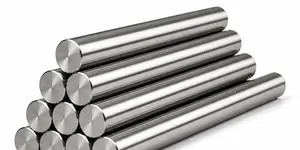
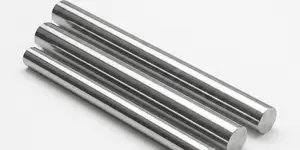
Inconel 600 may be manufactured through forging, rolling, drawing, stamping and welding operations. It is available in a variety of product forms, including plate, sheet, bar, tube, forging stock and fabricated structures.
Due to its tendency toward work hardening, machining operations generally require relatively low cutting speeds, rigid machine setups and high-performance carbide cutting tools to achieve optimal productivity and surface finish quality.
The alloy's excellent weldability allows it to be readily joined using TIG, MIG and conventional arc welding processes, making it suitable for large engineering structures and high-temperature industrial equipment.
In addition, appropriate solution heat treatment may be utilized to further optimize the microstructure and improve corrosion resistance and overall mechanical performance.
Part Two: Inconel 600
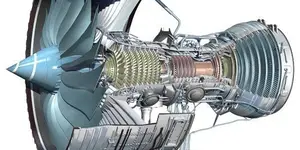
Inconel 600 is used for engine accessory components, exhaust systems, and high-temperature structural applications.
Used for furnace rollers, annealing tanks, heat treatment fixtures, annealing furnace components and other high-temperature heat-resistant equipment.
Applied to reactors, evaporators, heat exchangers, chlorination equipment and corrosive fluid treatment systems.
It is widely used in heat transfer tubes of steam generators in nuclear reactors, high-purity water systems, and nuclear engineering equipment.
Applied to high-temperature heat exchangers, combustion systems and energy conversion equipment.
Used for high-temperature food processing equipment and corrosion-resistant production systems.

