


Introduction
What Are MAR-M Alloys?
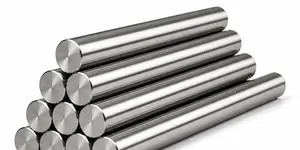
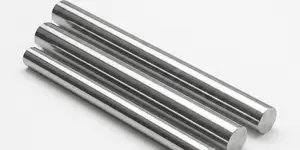
Mar-M alloys (Martin Metals alloys) are a family of premium superalloys (based on either nickel or cobalt) famous for retaining high strength, corrosion resistance, and structural stability at extreme temperatures (up to 1000°C).They are primarily used to cast critical, high-stress components in aerospace and industrial applications.
Technical Specifications
MAR-M 247
Max Service Temp: ~1000°C (1832°F)
Ultimate Tensile Strength (Room Temp): ~1119 MPa
Key Alloying Elements
Nickel, Chromium, Cobalt, Tungsten, Aluminum, Tantalum, and Hafnium
Technical Specifications
MAR-M 247
Max Service Temp: ~1000°C (1832°F)
Ultimate Tensile Strength (Room Temp): ~1119 MPa
Key Alloying Elements
Nickel, Chromium, Cobalt, Tungsten, Aluminum, Tantalum, and Hafnium
PRODUCTS
Complete MAR-M Alloys Product Range
Explore our inventory of MAR-M alloy grades, each with detailed specification and stock availability. Click for instant inquiry or download technical datasheets.


Characteristics & Common Alloys
Nickel-Based
MAR-M 247, MAR-M 002, MAR-M 200, MAR-M 246: Reinforced through precipitation hardening, solid solution, and grain-boundary strengthening.
They feature excellent creep-rupture properties and are the industry standard for casting equiaxed and directionally solidified components.

Characteristics & Common Alloys
Cobalt-Based
MAR-M 509, MAR-M 322, MAR-M 918: Known for superior hot-corrosion and oxidation resistance in corrosive environments.
They offer excellent ductility and high-temperature performance.

FAQs
MAR-M Alloys FAQs
What are MAR-M alloys?
MAR-M alloys are a family of nickel-based superalloys developed for high-temperature applications. They are commonly used in aerospace and gas turbine components due to their excellent creep resistance, oxidation resistance, and mechanical strength at elevated temperatures.
Where are MAR-M alloys used?
MAR-M alloys are widely used in:
Gas turbine blades and vanes
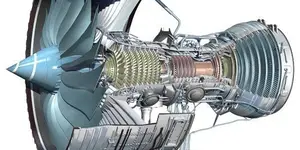
Jet engine components
Turbochargers
High-temperature industrial furnace parts
Gas turbine blades and vanes
Jet engine components
Turbochargers
High-temperature industrial furnace parts
Are MAR-M alloys cast or forged materials?
Most MAR-M alloys are produced using precision casting methods, especially investment casting, to achieve complex geometries required in turbine blades and aerospace parts.
What industries benefit most from MAR-M alloys?
Primary industries include:
Aerospace
Power generation
Defense
High-performance automotive (e.g., racing turbo systems)
Industrial gas turbines
Aerospace
Power generation
Defense
High-performance automotive (e.g., racing turbo systems)
Industrial gas turbines
What does “MAR-M” stand for?
“MAR-M” originally refers to “Materials Alloy Research – Modified”, a designation used for a series of advanced superalloys developed for demanding high-performance environments.
Why are MAR-M alloys preferred in aerospace applications?
They maintain high strength and stability under extreme heat and stress, making them ideal for turbine environments where temperatures can exceed 1000°C. Their resistance to deformation (creep) is a key advantage.
Can MAR-M alloys be welded or machined easily?
They are generally difficult to machine and weld due to their high hardness and complex microstructure. Specialized tooling and controlled processing conditions are usually required.
What are the key properties of MAR-M alloys?
Key properties include:
Excellent high-temperature strength
Superior creep resistance
Good oxidation and corrosion resistance
Stable microstructure under thermal cycling
Good fatigue resistance
Excellent high-temperature strength
Superior creep resistance
Good oxidation and corrosion resistance
Stable microstructure under thermal cycling
Good fatigue resistance
CONTACT US
Talk to an expert
Share your requirements and we’ll help you find the right solution for your business.
Get a quick quote
We typically confirm within 24 hours.