

STEP 1
Aerospace & Aviation
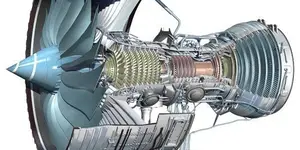
Mar-M 247 LC is extensively used for turbine blades, turbine wheels, shrouds and combustion components in aero-engines operating under extreme thermal conditions.

Mar-M 247 LC is a low carbon cast nickel base superalloy engineered to preserve MAR-M 247’s outstanding high temperature strength while offering enhanced castability, grain boundary stability and defect tolerance for complex turbine components.
Mar-M 247 LC (derived from MAR-M 247) is a low carbon cast nickel base superalloy engineered to preserve MAR M 247’s outstanding high temperature strength while offering enhanced castability, grain boundary stability and defect tolerance for complex turbine components.
It was originally developed to address solidification cracking and grain boundary embrittlement issues commonly encountered in highly alloyed, refractory rich cast superalloys. Mar-M 247 LC adopts a more production friendly composition by controlled reductions in carbon, zirconium, titanium, tungsten and chromium, coupled with tighter restrictions on sulfur and silicon impurities. This modification improves processing reliability without sacrificing the alloy’s high γ′ strengthening capacity.
Its superior performance stems from a well balanced refractory element design. Tungsten and molybdenum deliver potent solid solution strengthening of the γ matrix and mitigate diffusion controlled creep at high temperatures. Tantalum stabilizes the γ′ phase, modulates γ/γ′ element partitioning and sustains long term microstructural stability. Hafnium improves grain boundary cohesion and creep rupture properties by favorably modifying carbide formation and providing interdendritic strengthening. This combination of high temperature strength, microstructural stability and improved manufacturability makes Mar-M 247 LC an essential material for blades, vanes and other hot section components in industrial gas turbines and aerospace propulsion systems. Its application scope has now expanded beyond conventional investment casting.
As manufacturers pursue more flexible, robust and advanced manufacturing routes, Mar-M 247 LC remains a benchmark alloy for additive manufacturing, powder qualification and the development of next generation high temperature components.
The recent commercialization of Mar-M 247LC powder tailored for binder jetting further highlights the alloy family’s continued strategic value within modern industrial and aerospace supply chains, where performance, manufacturability and material availability must be considered in tandem.
Nickel acts as the primary matrix element. Chromium improves oxidation resistance, cobalt and tungsten strengthen the alloy at elevated temperatures, while tantalum, titanium and aluminium promote strong gamma-prime precipitation hardening.
Chemical Composition:
◆ Carbon, C : 0.07% - 0.08%
◆ Chromium, Cr: 8.00% - 8.50%
◆ Tantalum, Ta: 3.10% - 3.30%
◆ Molybdenum,Mo: 0.40% - 0.60%
◆ Titanium,Ti: 0.60% - 0.90%
◆ Tungsten,W: 9.30% - 9.70%
◆ Aluminium,Al: 5.40% - 5.70%
◆ Boron,B: 0.01% - 0.02%
◆ Zirconium,Zr: 0.007% - 0.02%
◆ Cobalt,Co: 9.00% - 9.50%
◆ Hafnium,Hf: 1.40% - 1.60%
◆ Nickel: Balance
Physical and Thermal Properties
Mechanical Properties
● High-Temperature Strength: Retains excellent creep-rupture strength and tensile properties at extreme temperatures up to 1,000°C–1,100°C.
●Low Carbon Variant: The low carbon modification improves ductility, castability, and resistance to grain-boundary cracking compared to standard MAR-M 247.
●Applications: Widely used for advanced gas turbine blades, vanes, and aerospace structural components.
