05 Monel Alloy-1

Monel Alloy Products - Qihang Bida

Discover high-quality monel alloy materials for demanding industrial applications. Qihang Bida offers a full range of Monel 400, Monel K500, and other nickel-copper alloys in sheet, plate, bar, pipe, and custom forms.

Introduction-background
Introduction

What is Monel Alloy?

Monel alloys are primarily composed of 52%–68% nickel and copper, with trace iron, manganese, carbon and silicon. Unlike cupronickel, they contain less than 60% copper.These alloys withstand corrosion by aggressive substances such as high-velocity seawater, and feature good workability for hot/cold forming, machining and welding.
PRODUCTS

Our Monel Alloy Product Range

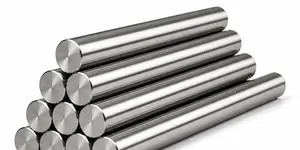
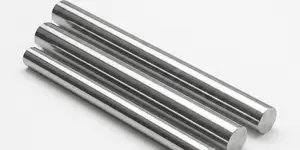
Qihang Bida provides a comprehensive selection of Monel alloy products to meet various industrial requirements. Below is our product listing with key specifications.
1e79c48d-6805-4c05-b913-75d741ca3cb9
Properties

Monel Alloy Properties

01
Monel is a binary solid-solution alloy. Since nickel and copper are fully miscible in all ratios, it exists as a single-phase material. Unlike steel, Monel is challenging to machine due to its rapid work hardening, so all turning and machining operations must be performed at low speeds and feed rates.
02
The alloy features outstanding resistance to corrosion and acids, and certain grades can withstand exposure to pure oxygen fires. It is widely deployed in severely corrosive service environments. Adding small amounts of aluminum and titanium produces Monel K-500, a superalloy that retains identical corrosion resistance while achieving significantly higher strength, thanks to gamma prime precipitates formed during aging. In general, Monel costs considerably more than stainless steel.
03
Monel alloy 400 has a specific gravity of 8.80 and a melting range of 1300–1350 °C. Its electrical conductivity is roughly 34%, and the annealed material registers 65 HRB in hardness. A key attribute of Monel 400 is its excellent toughness, which remains stable across a wide temperature spectrum.
04
This alloy delivers superior mechanical performance at cryogenic temperatures. Its strength and hardness rise with only minor loss of ductility and impact resistance. It exhibits no ductile-to-brittle transition even at liquid hydrogen temperatures, a stark difference from most ferrous alloys, which become brittle at low temperatures despite improved strength.
01 Aerospace and Aviation
Application
Aerospace Applications

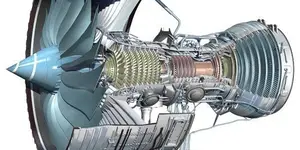
In the 1960s, Monel saw extensive application in aircraft fabrication. Frames and skins of experimental rocket planes were commonly made from this material to resist aerodynamic heating at extreme flight speeds. Though Monel retains strength and shape at high temperatures, its high density results in heavier parts.
Monel safety wire secures fasteners against loosening in hot sections of aircraft, while stainless steel wire is used in other areas to cut costs. A number of aircraft fasteners are also manufactured from Monel.

Superalloy in Oil and Gas
Application
Oil Production and Refining

Monel is deployed in the contact sections of alkylation units exposed to concentrated hydrofluoric acid. It delivers outstanding resistance to hydrofluoric acid of all concentrations even at boiling point, ranking among the most corrosion-resistant conventional engineering alloys. This material also performs well against sulfuric and hydrochloric acids under reducing environments.

Superalloy in Power Generation
Application
Marine Applications

Thanks to its superior corrosion resistance, Monel is well-suited for marine components including piping systems, pump shafts, seawater valves, trolling lines and strainer baskets. Certain non-magnetic Monel grades are adopted for anchor cables on minesweepers and enclosures for magnetic field measuring devices.
In leisure boating, Monel is used for shackle lashing wires of anchor ropes, water tanks, fuel tanks and various underwater fittings. It is also a common choice for propeller shafts and keel bolts. Hobiecat sailboats use Monel rivets at high-load positions. In saltwater service, stainless steel would corrode when paired with aluminum masts, booms and frames, so Monel is applied instead.
Given the risk of electrolytic corrosion in saltwater, Monel components must be properly isolated from other metals such as steel during ship construction.

FAQs

Monel Alloy FAQs

What is monel alloy?

Monel is a family of nickel-copper alloys primarily composed of about 60–70% nickel and 20–30% copper, with small amounts of iron, manganese, carbon, and silicon. It is known for its excellent corrosion resistance, especially in marine and chemical environments.

What are the key properties of monel alloy?

Monel alloys are valued for:
High resistance to seawater and salt corrosion
Excellent mechanical strength over a wide temperature range
Good weldability and fabrication performance
Strong resistance to acids and alkaline solutions

Is monel alloy better than stainless steel?

Monel is not universally “better,” but it performs better in specific environments:
In highly corrosive marine or chemical conditions, Monel often outperforms stainless steel
Stainless steel is generally more cost-effective and widely used for general applications
Material choice depends on environment, cost, and mechanical requirements

Can monel alloy be welded easily?

Yes, but it requires controlled welding procedures. Monel 400 has good weldability, while monel K-500 needs more careful handling due to its higher strength and precipitation-hardening characteristics.

Does monel alloy rust?

Monel does not “rust” in the traditional sense like iron-based materials. It forms a stable oxide layer and resists corrosion, especially in marine and chemical environments.

What are the main grades of monel alloy?

The most commonly used grades include:
Monel 400 – General-purpose corrosion-resistant alloy
Monel K-500 – Strengthened version with aluminum and titanium for higher mechanical strength
Other specialized variants exist for specific industrial applications

Where is monel alloy commonly used?

Monel is widely used in industries such as:

Marine engineering (propeller shafts, seawater valves, pump components)
Chemical and petrochemical processing equipment
Oil and gas offshore systems
Heat exchangers and desalination plants
Aerospace and high-performance engineering components

Is monel alloy resistant to seawater?

Yes. Monel has outstanding resistance to seawater corrosion, including flowing and stagnant conditions. This is one of the main reasons it is widely used in marine engineering applications.

Is monel alloy expensive?

Yes, monel is generally more expensive than stainless steel due to its high nickel content and specialized production process. However, its long service life in harsh environments can justify the cost.

What are the main grades of monel alloy?

The most commonly used grades include:

Monel 400 – General-purpose corrosion-resistant alloy
Monel K-500 – Strengthened version with aluminum and titanium for higher mechanical strength
Other specialized variants exist for specific industrial applications
CONTACT US
Talk to an expert
Share your requirements and we’ll help you find the right solution for your business.

    Get a quick quote

    We typically confirm within 24 hours.

    网络已连接