

STEP 1
Outstanding Corrosion Resistance
Monel 400 delivers excellent resistance to seawater and chemical corrosion. It stands up to acids, alkalis and saltwater, making it a prime choice for marine service.

Monel 400 is a single-phase nickel-copper solid solution containing approximately 67% nickel and 23%, featuring a face-centered cubic (FCC) crystal structure. This alloy can only be strengthened by cold working. In the annealed condition, it offers superior formability and requires no extra heat treatment. Soft annealing is performed at 700–900 °C.
Monel 400 is a single-phase nickel-copper solid solution containing approximately 67% nickel and 23%, featuring a face-centered cubic (FCC) crystal structure. This alloy can only be strengthened by cold working. In the annealed condition, it offers superior formability and requires no extra heat treatment. Soft annealing is performed at 700–900 °C.
Monel 400 maintains high strength and toughness across temperatures from subzero levels up to 400 °C. It exhibits no ductile-to-brittle transition, making it a viable alternative for applications where ferrous alloys are unsuitable.
The alloy boasts outstanding resistance to stress corrosion cracking. It is among the few engineering materials that withstand fluorine, hydrofluoric acid, hydrogen fluoride and their related compounds. It also provides excellent corrosion resistance against sulfuric acid, hydrochloric acid under reducing conditions, as well as seawater and alkaline media. However, the lack of chromium in its composition renders it vulnerable to oxidizing environments.
Monel 400 may suffer stress cracking when exposed to mercury and aerated hydrochloric acid vapors. For such service conditions, stress-relief annealing at 500–650 °C is recommended.
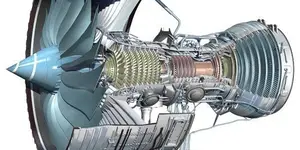
Monel 400 is widely applied across multiple industries such as chemical processing, aerospace, marine engineering, and oil & gas. Its reliable strength over a broad temperature range and superior thermal fatigue resistance make it well suited for harsh operating conditions.
Some alternatives to Inconel 600 include Inconel 625, Inconel 718, and Hastelloy C-276. Inconel 625 offers superior corrosion resistance and strength for marine applications, while Inconel 718 provides better mechanical properties under extreme pressure and temperature, making it ideal for aerospace components. Hastelloy C-276, on the other hand, is better suited for highly corrosive chemical environments requiring excellent pitting resistance.
Each alternative offers specific advantages based on the intended environment and strikes a balance between tensile strength, corrosion resistance, and heat resistance. This makes Inconel 600 the optimal choice when chemical and mechanical stability is required over a wide temperature range.
Monel 400 is a nickel-copper alloy featuring outstanding corrosion resistance, especially in seawater and acidic media. Iron and manganese enhance its mechanical strength, while carbon and sulfur are strictly limited to prevent material brittleness.
| Element | Percentage (%) |
|---|---|
| Nickel (Ni) | 63.0 min |
| Copper (Cu) | 28.0 – 34.0 |
| Iron (Fe) | 2.5 max |
| Manganese (Mn) | 2.0 max |
| Silicon (Si) | 0.5 max |
| Carbon (C) | 0.3 max |
| Sulfur (S) | 0.024 max |
| Property | Values |
|---|---|
| Density | 8.8 g/cm³ |
| Melting Point | 1350°C |
| Thermal Conductivity | 21.8 W/(m·K) |
| Elastic Modulus | 179 – 200 GPa |
Monel 400 possesses a uniform single-phase solid-solution structure, in which nickel and copper achieve complete mutual solubility across all compositional ratios. This homogeneous microstructure endows the alloy with superior mechanical performance and comprehensive corrosion resistance. Additionally, it enables consistent structural response under thermal stress, effectively reducing the risk of material failure.
The excellent metallographic stability of Monel 400 provides reliable resistance to intergranular corrosion and pitting corrosion in marine and chemical service conditions. Its stable microstructure sustains consistent performance in highly corrosive media, including acids, alkalis, and brine environments.
Monel 400 has a tensile strength of 480–550 MPa and a yield strength of 170–345 MPa. It delivers good thermal fatigue resistance up to 400 °C, retaining stable mechanical properties without performance degradation. The alloy features a Rockwell B hardness of 70–80 and an excellent elongation of 30%–40%.
| Property | Values |
|---|---|
| Tensile Strength | 480 – 550 MPa |
| Yield Strength | 170 – 345 MPa |
| Hardness | Rockwell B70 – B80 |
| Elongation | 30 – 40% |
| Thermal Fatigue Resistance | Effective at ~400°C |
Aerospace and Aviation:
Power Generation:
Oil and Gas:
Energy Industry:
Marine Engineering:
Mining Industry:
Automotive Industry:
Chemical Processing:
Pharmaceutical and Food Industry:
Military and Defense:
Nuclear Industry:
