

STEP 1
Production Methods
GTD-111 is available in both conventionally cast (CC) and directionally solidified (DS) forms, optimized to sustain structural integrity under extreme mechanical loading.

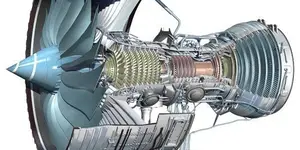
GTD-111 is a proprietary, nickel-based superalloy, primarily used for manufacturing high-pressure turbine blades and stage-1 or stage-2 buckets in high-power industrial gas turbines. It is highly valued for its exceptional creep resistance, mechanical strength, and oxidation/corrosion resistance at extreme temperatures.
GTD-111 is a proprietary, nickel-based superalloy, primarily used for manufacturing high-pressure turbine blades and stage-1 or stage-2 buckets in high-power industrial gas turbines. It is highly valued for its exceptional creep resistance, mechanical strength, and oxidation/corrosion resistance at extreme temperatures.
| Alloy | P | S | Cr | B | W | Mo | Al | Ni | C | Si | Ti | Fe |
|---|---|---|---|---|---|---|---|---|---|---|---|---|
| GTD111 | ≤0.005 | ≤0.010 | 13.5- 14.3 | 0.007- 0.02 | 3.5- 4.1 | 1.3- 1.7 | 2.8- 3.4 | Bal | 0.07- 0.12 | ≤0.20 | 4.6- 5.2 | - |
Material Composition: GTD-111 is a precipitation-hardened nickel-based superalloy. It contains elevated levels of aluminum (Al) and titanium (Ti), forming a high volume fraction (~60%) of gamma-prime precipitates for prominent strengthening effects. Balanced concentrations of chromium (Cr), cobalt (Co), molybdenum (Mo), tungsten (W), and tantalum (Ta) are incorporated to optimize overall structural durability.
Operating Temperatures: The alloy is engineered for continuous service at temperatures reaching up to 1000°C (1832°F).
Performance Advantage: It delivers exceptional tensile performance and creep resistance. Compared with conventional alloys such as IN-738LC, GTD-111 can operate at approximately 20°C higher while maintaining an equivalent stress rupture life.

