

STEP 1
Superior High-Temperature Strength
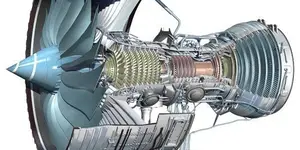
Rene 80 achieves a tensile strength of up to 1300 MPa and retains full mechanical integrity at temperatures over 850 °C, making it well-suited for aero-engines and gas turbines.

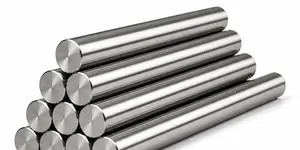
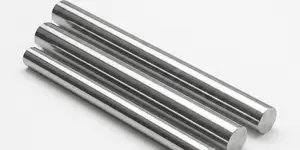
Rene 80, with the UNS designation N07080, is a nickel-based superalloy. It complies with multiple industry standards including ASTM B637, DIN/EN 2.4952 (NiCr20TiAl) and GB/T 14992 (GH4033), and is also specified in AMS 4592 and ASME SB-637. It is a well-acknowledged material for high-temperature service.
Rene 80 is a high-strength nickel-chromium superalloy engineered to endure extreme temperatures and mechanical loads. It boasts outstanding fatigue resistance, thermal stability and creep-rupture properties, and is widely applied in gas turbines, aerospace parts and power generation equipment.
Delivering reliable performance above 850°C, Rene 80 sustains its structural integrity during long-term service. It is commonly manufactured into turbine blades, combustion chamber components and other parts operating under cyclic thermal loads and high pressure.
Rene 80’s chemical composition delivers outstanding high-temperature strength and fatigue resistance. Nickel serves as the base matrix, while chromium boosts oxidation resistance. Aluminum, titanium and tungsten further elevate strength and thermal stability via precipitation hardening.
| Element | Composition (%) |
|---|---|
| Nickel (Ni) | Balance |
| Chromium (Cr) | 14 |
| Cobalt (Co) | 9 |
| Molybdenum (Mo) | 4 |
| Aluminum (Al) | 3 |
| Titanium (Ti) | 5 |
| Tungsten (W) | 4 |
| Boron (B) | Max 0.015 |
| Property | Values |
|---|---|
| Density (g/cm³) | 8.79 |
| Melting Point (°C) | 1340 |
| Thermal Conductivity (W/(m·K)) | 11.5 |
| Modulus of Elasticity (GPa) | 211 |
Rene 80 consists of a γ-phase nickel matrix reinforced by γ' (gamma prime) precipitates, which deliver excellent high-temperature strength and structural stability. The γ matrix restricts dislocation motion, effectively improving creep resistance and preserving mechanical integrity under long-term stress.
Boron further strengthens grain boundaries and boosts fatigue resistance. Thanks to this optimized microstructure, the alloy withstands severe thermal cycling, making it an optimal choice for aero-engines and power turbines.
Aerospace & Aviation
Power Generation
Oil & Gas
Energy Systems
Marine
Mining
Automotive
Chemical Processing
Pharmaceutical & Food Processing
Military & Defense
Nuclear Industry
This synergistic enhancement of oxidation resistance and grain boundary strength significantly extends component lifespan, reduces maintenance frequency, and improves overall system reliability—especially under cyclic thermal loading and high-temperature creep conditions.
