

STEP 1
Outstanding Creep Resistance
The combination of single-crystal structure and rhenium strengthening significantly improves resistance to creep deformation under high-temperature and high-stress conditions.

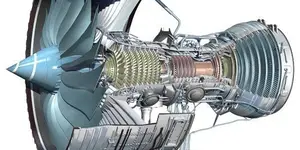
Rene N5 (also designated René N5)is a second-generation single-crystal nickel-based superalloy, used for critical hot-end components in aircraft engines and industrial gas turbines. Designed primarily for high-pressure turbine blades and vanes, the alloy incorporates approximately 3 wt.% rhenium (Re) and utilizes advanced single-crystal casting technology to eliminate grain boundaries. This design significantly enhances creep resistance, fatigue performance, and microstructural stability at elevated temperatures, making Rene N5 one of the most influential single-crystal superalloys in modern turbine engine development.
Rene N5 (also designated René N5)is a second-generation single-crystal nickel-based superalloy, used for critical hot-end components in aircraft engines and industrial gas turbines. Designed primarily for high-pressure turbine blades and vanes, the alloy incorporates approximately 3 wt.% rhenium (Re) and utilizes advanced single-crystal casting technology to eliminate grain boundaries. This design significantly enhances creep resistance, fatigue performance, and microstructural stability at elevated temperatures, making Rene N5 one of the most influential single-crystal superalloys in modern turbine engine development.
Rene N5 belongs to the family of γ/γ′-strengthened nickel-based single-crystal superalloys. Its exceptional mechanical properties are derived from a high volume fraction of γ′-Ni₃(Al,Ti,Ta) precipitates combined with solid-solution strengthening from refractory elements such as rhenium and tungsten. By eliminating grain boundaries through single-crystal solidification, the alloy avoids grain-boundary-related failure mechanisms and achieves superior creep strength and stress-rupture life under high-temperature operating conditions.
As a representative second-generation single-crystal superalloy, Rene N5 was among the first commercial turbine blade materials to incorporate rhenium strengthening. The addition of rhenium significantly reduces atomic diffusion rates within the γ matrix, slowing microstructural degradation and enhancing long-term creep resistance. This alloy design philosophy subsequently became the foundation for the development of later second-generation and third-generation single-crystal superalloys.
Rene N5 exhibits excellent oxidation resistance, hot-corrosion resistance, and thermal fatigue performance. The alloy is capable of long-term operation in complex combustion environments exceeding 1000°C. When combined with advanced thermal barrier coating (TBC) systems and sophisticated internal cooling designs, its temperature capability can be further extended, making it suitable for the most demanding turbine engine applications.
In recent years, Rene N5 has also become an important research material for laser additive manufacturing, laser repair, and single-crystal remanufacturing technologies. These advanced processing techniques provide new opportunities for extending the service life of high-value turbine components and reducing maintenance costs in aerospace applications.
Because Rene N5 is manufactured as a single-crystal alloy, traditional grain-boundary strengthening elements such as carbon, boron, and zirconium are minimized or eliminated to avoid grain-boundary-related degradation mechanisms.
| Element | Rene N5 (wt.%) |
|---|---|
| Nickel (Ni) | Balance |
| Chromium (Cr) | 7.0–8.0 |
| Cobalt (Co) | 7.0–8.0 |
| Tungsten (W) | 5.0–6.0 |
| Tantalum (Ta) | 6.0–7.0 |
| Aluminum (Al) | 6.0–7.0 |
| Rhenium (Re) | 2.5–3.5 |
| Molybdenum (Mo) | 1.0–2.0 |
| Hafnium (Hf) | 0.1–0.3 |
| Carbon (C) | Trace or None |
| Boron (B) | Trace or None |
| Zirconium (Zr) | Trace or None |
Rene N5 has a density of approximately 8.7–8.9 g/cm³ and a melting range of approximately 1320–1380°C. The alloy is designed for long-term operation at temperatures exceeding 1000°C and is widely used in advanced turbine blade applications.
Its microstructure consists primarily of a γ matrix containing a high volume fraction of cuboidal γ′ precipitates. Following optimized heat treatment, a highly uniform γ/γ′ microstructure is obtained, providing exceptional elevated-temperature strength and creep resistance.
Rhenium enrichment within the γ matrix reduces diffusion rates and improves resistance to microstructural coarsening during prolonged thermal exposure. This characteristic significantly enhances long-term microstructural stability and service life under high-temperature loading conditions.
The alloy also exhibits excellent oxidation resistance and hot-corrosion resistance, allowing reliable performance in combustion gases, thermal cycling environments, and other severe operating conditions encountered in gas turbine engines.
Rene N5 is primarily manufactured using single-crystal investment casting technology. Strict control of solidification conditions, withdrawal rates, and thermal gradients is required to ensure the formation of a defect-free single-crystal structure.
Due to its exceptionally high strength and work-hardening characteristics, machining Rene N5 is challenging. Advanced CNC machining systems, high-performance coated cutting tools, and optimized cutting parameters are typically required to achieve the desired dimensional accuracy and surface finish.
Heat-treatment procedures generally include solution treatment followed by multiple aging stages to establish the optimal γ/γ′ microstructure and maximize mechanical performance.
Recent developments in laser additive manufacturing, laser cladding, and repair technologies have enabled successful remanufacturing and restoration of Rene N5 single-crystal components. These technologies provide cost-effective solutions for extending the service life of high-value turbine hardware.
Aircraft Engines
Industrial Gas Turbines
Aerospace Industry
Power Generation Equipment
Single-Crystal Component Repair
Defense Industry

