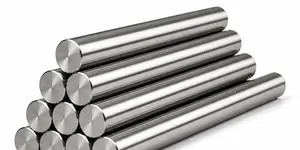
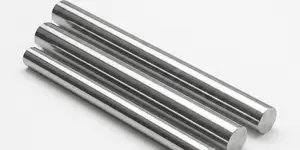

Inconel 600-2

Stellite 6 Alloy

Stellite 6 (UNS R30006) is a cobalt-chromium superalloy complying with ASTM F75, B426, B659 and ISO 5832-4. Its equivalent grades include DIN/EN 2.4771 and GB/T 15025: CoCrW6.
As a high-performance cobalt-based alloy, Stellite 6 features outstanding resistance to wear, abrasion and corrosion. It sustains high strength and hardness at elevated temperatures, ideal for extreme service conditions. The alloy excels in scenarios involving sliding wear, chemical attack and thermal cycling.

Stellite 6 Alloy Basic Introduction

Stellite 6 (UNS R30006) is a cobalt-chromium superalloy complying with ASTM F75, B426, B659 and ISO 5832-4. Its equivalent grades include DIN/EN 2.4771 and GB/T 15025: CoCrW6.

As a high-performance cobalt-based alloy, Stellite 6 features outstanding resistance to wear, abrasion and corrosion. It sustains high strength and hardness at elevated temperatures, ideal for extreme service conditions. The alloy excels in scenarios involving sliding wear, chemical attack and thermal cycling.

Stellite 6 maintains stable strength and fatigue resistance at temperatures up to 870 °C. It is widely used across aerospace, energy, oil & gas and chemical processing sectors for components operating under high heat and severe working conditions. Typical applications include valve seats, turbine parts, cutting tools and wear-resistant surface coatings.

The alloying elements of Stellite 6 strike an optimal balance between wear and corrosion resistance. Chromium enhances oxidation resistance, while tungsten boosts hardness. Carbon elevates mechanical strength, though excessive content may lead to increased brittleness.

Stellite 6 Alloy Chemical Composition

ElementComposition (%)
Cobalt (Co)Balance
Chromium (Cr)27.0-32.0
Tungsten (W)4.0-6.0
Carbon (C)1.0-1.4
Nickel (Ni)Max 3.0
Silicon (Si)Max 1.0
Iron (Fe)Max 3.0

Stellite 6 Alloy Physical Properties

Stellite 6 offers high density and thermal conductivity, contributing to its durability in demanding environments. Its thermal stability ensures excellent performance at elevated temperatures, with minimal wear and degradation.
PropertyValues
Density (g/cm³)8.79
Melting Point (°C)1330
Thermal Conductivity (W/(m·K))12.7
Elastic Modulus (GPa)206

Metallographic Structure of Stellite 6 Alloy

Stellite 6 has a cobalt-based metallographic matrix embedded with finely distributed carbides. Chromium and tungsten carbides strengthen the matrix, endowing the alloy with superior wear resistance against sliding and abrasive wear. These uniformly distributed carbides also form a protective oxide film, further improving corrosion resistance.

Its unique microstructure delivers excellent stability during thermal cycling, making the alloy well-suited for high-temperature components. While increased carbon content boosts mechanical strength, it reduces ductility, which calls for careful control during machining and fabrication. Overall, this microstructure guarantees outstanding long-term durability in extreme service conditions.

Stellite 6 Alloy Features

STEP 1

Superior Wear Resistance

Stellite 6 delivers outstanding resistance to sliding wear and abrasion. It is an ideal material for valve seats, cutting tools and friction-prone parts, effectively prolonging the service life of key equipment.

STEP 2

High-Temperature Thermal Stability

The alloy retains stable mechanical properties at temperatures up to 870°C. Its strong thermal fatigue resistance ensures dependable operation for turbines, engines and heat exchangers under harsh working conditions.

STEP 3

Excellent Corrosion Resistance

Thanks to its high chromium content, Stellite 6 forms a dense protective oxide layer, delivering remarkable protection against oxidation and corrosion in chemical and marine service environments.

STEP 4

High Thermal Fatigue Resistance

It performs reliably under continuous thermal cycling. The stable microstructure guarantees long service life for power generation turbines and aerospace components subject to frequent temperature variations.

STEP 5

Limited Machinability, Good Weldability

Its high hardness results in relatively poor machinability, and precision processing typically relies on grinding. Conversely, Stellite 6 features excellent weldability, making it well suited for hardfacing to improve wear performance and lower maintenance costs.

Applications of Stellite 6 Alloy

Aerospace & Aviation:

  • Boasting superior wear resistance and high-temperature thermal stability, Stellite 6 is widely adopted for valve seats, turbine blades and bearings in aero-engines.

Power Generation:

  • In power plants, it is applied to steam turbines, control valves and wear-prone surfaces, delivering great durability and erosion resistance in high-pressure working conditions.

Oil & Gas:

  • The alloy serves for valves, drilling tools and refinery equipment, maintaining reliable wear and corrosion resistance amid abrasive operating environments.

Energy Sector:

  • It is utilized in thermal energy systems and gas turbines, performing steadily against recurring thermal cycling and mechanical wear.

Marine Industry:

  • Stellite 6 is fitted to propeller shafts, pumps and other marine parts, effectively resisting corrosion and wear caused by saltwater.

Mining:

  • For mining operations, it is used on drill bits, crushers and slurry pumps, offering outstanding abrasion resistance under harsh abrasive and high-stress conditions.

Automotive:

  • It is a preferred material for engine exhaust valves and other key components, where wear resistance and thermal fatigue protection are critical to stable operation.

Chemical Processing:

  • Widely used in chemical reactors, pumps and valves, it provides long-lasting corrosion resistance in aggressive chemical environments.

Food & Pharmaceutical:

  • The material creates contamination-free surfaces for processing equipment, combining excellent wear resistance with prolonged service life.

Military & Defense:

  • Stellite 6 is applied to missile parts, armor-piercing projectiles and other defense components, standing up to extreme conditions with exceptional wear resistance.

Nuclear Industry:

  • It is used for valve seats and seals in nuclear reactors, maintaining dependable performance under thermal load and radiation exposure.

Similar Models

Insights & Guides

网络已连接