
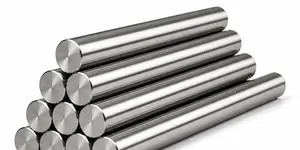
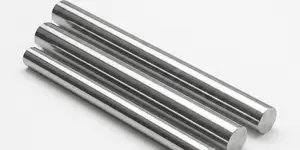
The alloy attains superior high-temperature strength owing to solid-solution strengthening elements including molybdenum, cobalt and chromium, as well as age-hardening constituents such as aluminum and titanium. It delivers greater strength and superior thermal stability compared with conventional Alloy 718.


Introduction
What is Waspaloy?
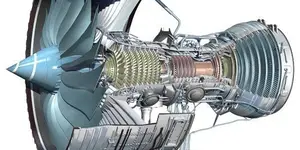
Waspaloy (UNS N07001 / W. Nr. 2.4654) is an age-hardenable Nickel-based superalloy. It exhibits exceptional high-temperature strength and favorable corrosion resistance, particularly outstanding oxidation resistance. The alloy maintains reliable performance at service temperatures up to 650°C (1200°F) for critical rotating components, and can withstand continuous exposure at temperatures as high as 870°C (1600°F), making it widely utilized for gas turbine and aerospace structural parts.

Performance
Waspaloy Performance
FAQ
Waspaloy FAQs
Waspaloy is a precipitation-hardened nickel-based superalloy widely used in high-temperature, high-stress environments such as gas turbines, aerospace engines, and industrial heat applications. Below are the most common FAQs to help you understand it quickly and clearly.
What is waspaloy?
Waspaloy is a nickel-based superalloy designed for extreme heat resistance and mechanical strength. It maintains stability in high-stress environments, especially in aerospace and gas turbine components.
Is Waspaloy stronger than Inconel?
Compared to many Inconel grades, Waspaloy generally provides better high-temperature strength and creep resistance, but Inconel alloys may offer better weldability and broader versatility depending on the grade.
What makes waspaloy resistant to heat?
Its strength comes from a carefully balanced composition of nickel, cobalt, chromium, and titanium, along with precipitation hardening phases that remain stable at high temperatures.
What is the maximum operating temperature of Waspaloy?
Waspaloy typically performs well up to around 870°C (1600°F) under long-term service conditions, depending on stress levels and component design.
Can waspaloy be welded easily?
No. Waspaloy is considered difficult to weld due to its high strength and cracking sensitivity. Special welding techniques and heat treatment controls are required.
Is waspaloy still widely used today?
Yes. Despite newer alloys being developed, Waspaloy remains a benchmark material for high-temperature turbine components due to its proven long-term performance.
CONTACT US
Talk to an expert
Share your requirements and we’ll help you find the right solution for your business.
Get a quick quote
We typically confirm within 24 hours.