The alloy processing properties of Haynes 25 Alloy
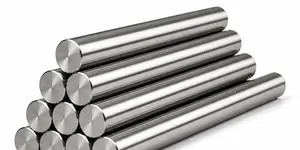
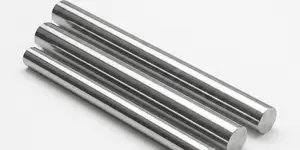
The Haynes 25 alloy can be produced through hot rolling, cold rolling, forging, stamping and manufacturing processes. This alloy offers a variety of product forms for selection, including sheets, strips, bars, tubes, forgings and welded components, with excellent thermal and cold working properties.
Heat processing performance
This alloy exhibits excellent heat processing characteristics and can be processed through methods such as forging, hot rolling, and hot forming. The typical heat processing temperature range is approximately 1175°C to 1230°C, enabling the production of complex high-temperature components. During heat processing, it is recommended to uniformly heat the material to the appropriate temperature range and control the amount of deformation to avoid internal cracks or poor microstructure.
Cold working performance
Haynes 25 exhibits excellent cold working properties and can be processed through methods such as stamping and cold forming. However, due to its high strength, this alloy has a significant tendency towards work hardening. During the cold working process, the material hardens rapidly, so intermediate annealing treatment may be required to restore plasticity and facilitate subsequent processing.
Machine processing performance
Due to its relatively high strength and significant tendency for work hardening, machine processing operations typically require:
Lower cutting speed: Compared to processing ordinary stainless steel, a lower cutting speed is required to reduce work hardening.
Setting for a rigid machine tool: Ensure that the machine tool, fixtures, and workpieces have sufficient rigidity.
Wear-resistant hard alloy cutting tools: Use sharp and durable hard alloy tools to achieve the best production efficiency and surface quality
Sufficient cooling and lubrication: Use an adequate amount of cutting fluid to dissipate heat and reduce tool wear.
Welding performance
This alloy exhibits excellent weldability and can be connected using techniques such as gas tungsten arc welding, gas metal arc welding, plasma arc welding, and resistance welding. In many applications, satisfactory welding performance can be achieved without the need for complex post-weld heat treatment. The welding area should be thoroughly cleaned before welding to remove oil, oxides, and other contaminants.
Heat treatment
Appropriate solid solution heat treatment can be adopted to improve the uniformity of the microstructure, optimize the mechanical properties and enhance the long-term service stability. Typical heat treatments involve heating the material to an appropriate temperature and then rapidly cooling it to obtain a uniform solid solution structure.
These processing characteristics enable Haynes 25 to be manufactured into a wide variety of complex high-temperature components, while ensuring reliable long-term service performance in demanding high-temperature applications such as aircraft engines, gas turbines, and defense.