

In modern metal manufacturing, product quality often depends on what happens at the microscopic level during solidification. Manufacturers that produce aluminum products, automotive components, aerospace parts, electrical conductors, and precision castings constantly look for ways to improve mechanical strength, surface finish, and process stability. One of the most effective methods for achieving these goals is grain refinement, and master alloys play a critical role in that process.
Many engineers understand that finer grains usually lead to better material performance, but fewer people fully understand how master alloys actually influence grain structure during metal processing. This article explains the relationship between master alloys and grain refinement, explores the science behind the process, and shows why grain-refining master alloys have become essential in modern metallurgy.
What Is a Master Alloy?
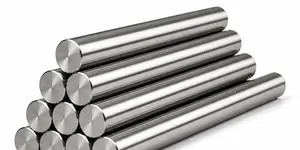
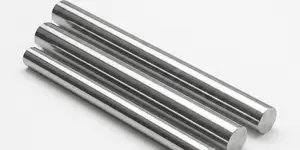
A master alloy is a specially prepared alloy that contains a high concentration of one or more alloying elements. Manufacturers add master alloys to molten metals to modify chemical composition or improve metallurgical properties.
Instead of adding pure elements directly into a melt, foundries and metal processors often prefer master alloys because they provide:
Better element distribution
Faster dissolution
More stable composition control
Reduced oxidation loss
Improved process efficiency
Common master alloys include aluminum-titanium-boron (Al-Ti-B), aluminum-strontium (Al-Sr), aluminum-zirconium (Al-Zr), and copper-based or magnesium-based variants designed for specific industrial applications.
Among these products, grain-refining master alloys are especially important because they directly influence the solidification structure of metals.
Understanding Grain Refinement in Metal Processing
When molten metal cools and solidifies, crystals begin to form. These crystals are commonly called grains. The size and distribution of these grains strongly affect the final properties of the metal.
Coarse grains often create problems such as:
Reduced mechanical strength
Lower ductility
Uneven surface quality
Increased cracking risk
Poor machining performance
Inconsistent heat treatment response
Fine and uniform grains generally improve overall material performance. Manufacturers therefore use grain refinement techniques to control solidification behavior and produce a more desirable microstructure.
The principle behind grain refinement is relatively straightforward. During solidification, more nucleation sites lead to the formation of a larger number of smaller grains instead of a few large crystals. Master alloys help create these nucleation sites efficiently.
How Master Alloys Improve Grain Refinement
Master Alloys Create Effective Nucleation Sites
The most important function of a grain-refining master alloy is to introduce particles that act as nucleation centers during solidification.
For example, Al-Ti-B master alloys contain compounds such as titanium diboride (TiB₂). These particles remain stable inside molten aluminum and provide ideal surfaces for aluminum crystals to begin forming.
Because many nucleation sites are available throughout the melt, crystals start growing simultaneously in multiple locations. This mechanism produces a much finer and more uniform grain structure.
In aluminum casting and rolling applications, this refinement effect can significantly improve product consistency.
Common Grain Refinement Mechanism
The grain refinement process in aluminum alloys is commonly associated with the interaction between titanium and boron compounds:
TiB₂ particles act as heterogeneous nucleation substrates during aluminum solidification
Although the process involves complex metallurgical reactions, the practical result is straightforward: finer grains and improved material properties.
Master Alloys Reduce Columnar Grain Growth
Without grain refinement, metals often develop columnar grains that grow in one dominant direction. Columnar structures can reduce isotropic mechanical performance and increase the risk of hot cracking.
Master alloys encourage equiaxed grain formation instead of directional grain growth. Equiaxed grains distribute stress more evenly across the material, which improves structural reliability.
This advantage becomes especially important in aerospace aluminum plates, automotive wheels, extrusion billets, and high-performance castings.
Master Alloys Improve Mechanical Properties
Fine grain structures generally enhance multiple mechanical characteristics at the same time.
Manufacturers often observe improvements in:
Tensile strength
Yield strength
Elongation
Fatigue resistance
Impact toughness
The relationship between grain size and strength is widely recognized in metallurgy.
Grain Size and Strength Relationship
Fine grains strengthen metals because grain boundaries obstruct dislocation movement: σy = σ0 + kd^-1
In this Hall–Petch relationship, smaller grain size \(d\) contributes to higher yield strength.
This effect explains why grain-refined alloys often perform better under mechanical stress and cyclic loading conditions.
Master Alloys Enhance Surface Quality
Surface defects frequently originate from uneven solidification behavior. Coarse grains can create rough surfaces, segregation problems, and inconsistent finishing results.
Grain-refining master alloys help manufacturers produce smoother surfaces with better dimensional consistency. This advantage is particularly valuable for:
Aluminum sheets
Foils
Extruded profiles
Precision die castings
Decorative aluminum panels
Improved surface quality also reduces secondary processing costs because manufacturers spend less time on machining, polishing, and correction work.
Master Alloys Improve Casting Stability
Stable casting performance is essential for industrial productivity. Inconsistent grain structures can lead to:
Hot tearing
Shrinkage defects
Segregation
Porosity
Flow instability
Master alloys help stabilize solidification conditions throughout the melt. As a result, manufacturers achieve higher production efficiency and lower rejection rates.
Large-scale foundries often rely on carefully controlled grain-refining additions to maintain stable quality across continuous casting operations.
Types of Master Alloys Used for Grain Refinement
Different metals require different grain-refining systems.
Aluminum-Based Grain Refiners
Aluminum alloys represent the largest application area for grain-refining master alloys.
Common products include:
Al-Ti-B master alloy
Al-Ti-C master alloy
Al-B master alloy
Among these options, Al-Ti-B remains one of the most widely used due to its strong refinement efficiency and relatively stable performance.
Magnesium Alloy Grain Refiners
Magnesium alloys require specialized grain refiners because magnesium exhibits different solidification characteristics compared to aluminum.
Manufacturers may use zirconium-containing master alloys to refine magnesium grain structures and improve casting integrity.
Copper-Based Master Alloys
Copper alloy manufacturers also use grain refiners to improve conductivity, strength balance, and casting performance.
These master alloys are commonly applied in electrical, marine, and industrial equipment sectors.
Factors That Influence Grain Refinement Performance
The effectiveness of a master alloy does not depend solely on its chemical composition. Several process variables also influence final results.
Melt Temperature
Excessively high temperatures may reduce the effectiveness of nucleating particles. Proper temperature control helps preserve grain-refining performance.
Holding Time
Long holding times can reduce refinement efficiency because some active particles may settle or react inside the melt.
Addition Method
Uniform distribution of the master alloy is essential. Poor addition practices may create inconsistent grain structures.
Alloy Composition
Certain alloying elements can either support or weaken grain refinement efficiency depending on metallurgical interactions.
Experienced metallurgical engineers usually optimize all these parameters together rather than focusing on only one variable.
Industrial Applications of Grain-Refining Master Alloys
Today, grain-refining master alloys support a wide range of industrial sectors.
Automotive Industry
Automotive manufacturers use grain-refined aluminum alloys for:
Wheels
Engine components
Transmission housings
Structural lightweight parts
Fine grains improve both strength and casting reliability.
Aerospace Industry
Aircraft manufacturers require extremely consistent material performance. Grain refinement helps improve fatigue resistance and structural integrity in aerospace-grade alloys.
Construction and Architecture
Architectural aluminum profiles benefit from improved surface finish and better extrusion quality after grain refinement treatment.
Electrical Applications
Copper and aluminum conductors often require refined microstructures to balance conductivity and mechanical durability.
Why Master Alloy Quality Matters
Not all master alloys deliver the same performance. Low-quality products may contain uneven particle distribution, excessive impurities, or unstable composition control.
Reliable suppliers typically focus on:
Strict chemical analysis
Controlled particle size distribution
Stable production technology
Consistent batch quality
Professional technical support
For industrial buyers, choosing a high-quality master alloy supplier often reduces long-term production risks and improves final product consistency.
Future Trends in Grain Refinement Technology
As manufacturers pursue lighter materials, higher efficiency, and lower production costs, grain refinement technology continues to evolve.
Several industry trends are becoming increasingly important:
Environmentally friendly alloy systems
High-efficiency nano-scale refiners
Advanced continuous casting technologies
Precision-controlled metallurgical additives
AI-assisted process optimization
Research institutions and alloy manufacturers are also developing new grain-refining systems designed for recycled metals and advanced lightweight alloys.
Conclusion
Master alloys play a central role in improving grain refinement across modern metal manufacturing processes. By introducing effective nucleation sites, reducing coarse grain growth, and stabilizing solidification behavior, these alloys help manufacturers achieve stronger materials, smoother surfaces, and more reliable production results.
From aluminum casting to aerospace engineering, grain-refining master alloys continue to support higher performance standards throughout the global metals industry. Companies that invest in high-quality master alloys and optimized metallurgical control can improve product quality, reduce defects, and strengthen their competitive position in demanding industrial markets.
As advanced manufacturing technologies continue to develop, the importance of grain refinement will only increase. For foundries, rolling mills, extrusion plants, and precision component manufacturers, understanding how master alloys improve grain refinement is no longer just a technical advantage. It has become an essential part of producing consistent, high-value metal products in a highly competitive global market.

